


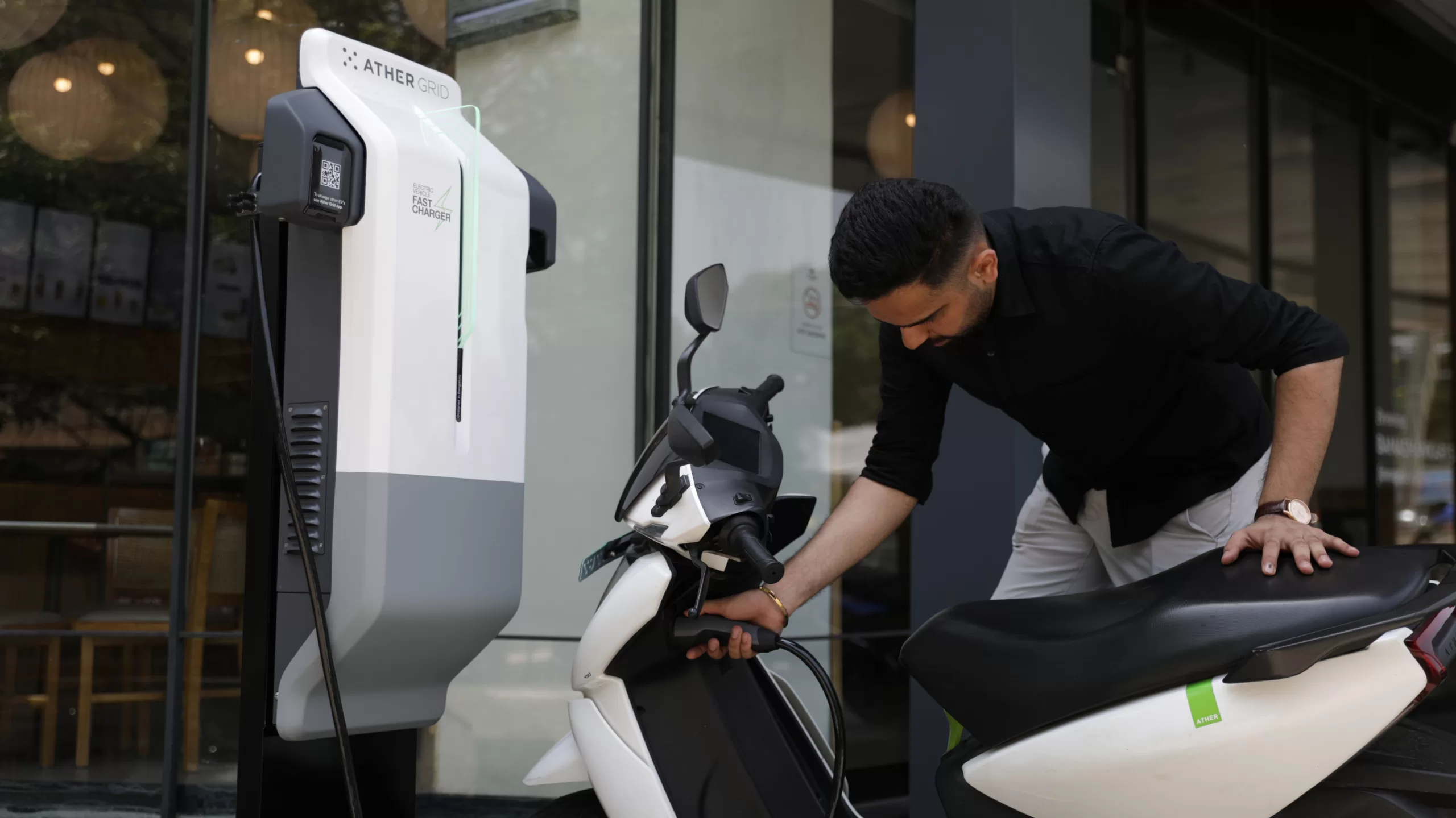
EV two-wheelers are no longer a niche. As more Indians consider switching to EV two-wheelers, one thing is quietly making that decision easier: reliable public charging infrastructure.
EV adoption in India has grown steadily over the past few years with state and central governments pushing policies to make charging infrastructure (CI) more accessible. However, while several manufacturers focus on building vehicles, very few are investing at scale to build the kind of public charging network India needs. That’s why some players, like Ather Energy, are choosing to go deep on CI. Their goal: reduce range anxiety, make charging effortless, and make electric two-wheeler ownership feel as easy as possible.
For instance, Ather’s fast charging networks for two-wheelers span over 400 cities, from major metros to tier-2 and tier-3 towns. The company now has over 3,500 charging points nationally. But what’s even more interesting is the way these networks now cover long-distance routes as well. From the southern tip of Kanyakumari to the western hub of Ahmedabad, you can ride across over 2,300 kilometers with access to fast chargers along the route. Similarly, the Chennai-Ahmedabad corridor, which runs over 1,900 kilometers, enables seamless travel even between two major hubs like Mumbai and Ahmedabad. Shorter and popular weekend routes are covered too – like Goa to Mumbai, or Delhi to Dehradun and Rishikesh, which are frequent getaway spots. Pilgrimage routes like Bengaluru to Tirupati are also covered, making religious travel easier. Other connected corridors include Guwahati–Shillong in the northeast, Bareilly to Nainital in the hills, Baripada to Puri, and even intercity routes like Bilaspur to Raigarh. Whether it’s a long ride, a daily commute, or a weekend plan, there’s a dependable network already in place to support it.
The confidence to plan these rides comes from knowing charging infrastructure will be available when you need it. For instance, usage data shows that most public charging sessions happen during the weekdays, especially between 6 and 7 pm, indicating that people are integrating charging into their daily routines and not treating it as a backup for emergencies. Moreover, most riders plug in when their battery is at 0-10%, which goes to show that riders aren’t too worried about finding a fast charger when their scooters’ batteries are running low. This kind of behaviour speaks volumes. Charging, once considered a hurdle, is becoming a habit.
Another development making EV charging simpler is the growing adoption of LECCS (Light Electric Combined Charging System), which is an industry-wide effort to standardize charging connectors across brands. In simple terms, it means that riders won’t have to worry about whether a charger will work with their vehicle. If their scooter supports LECCS, they can easily find, plug into, and use any compatible public charger, no matter which brand they ride or where they are.
Of course, the real win will come when people stop thinking about charging altogether, that is, when it becomes as invisible and reliable as mobile data or UPI payments. With the way things are moving, that change in mindset is already happening. Charging is one less thing EV two-wheeler owners are worrying about.
