


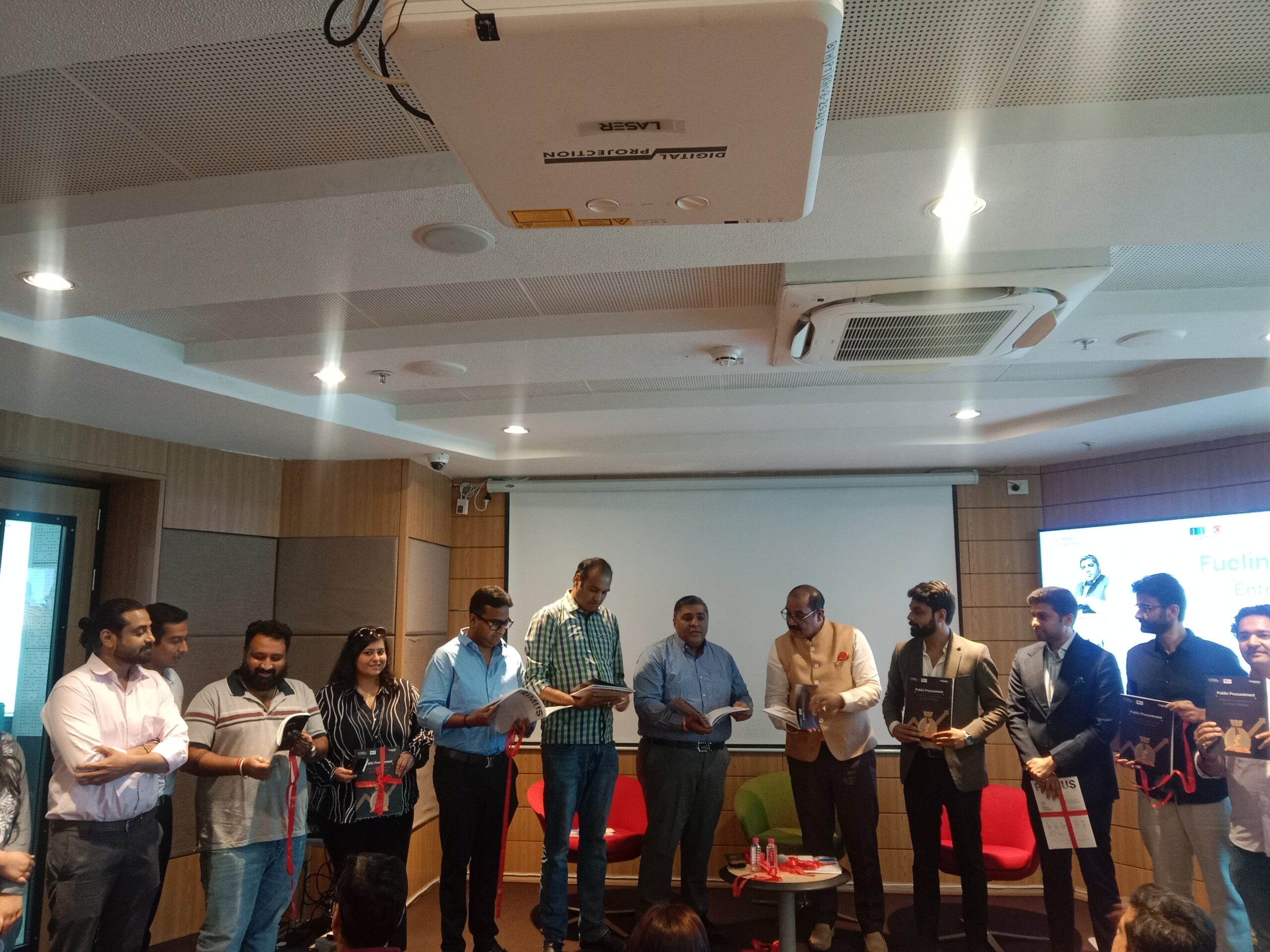
In a move that could redefine India’s startup landscape, a new report has highlighted the untapped potential of public procurement as a ₹88,000 crore opportunity to accelerate the country’s innovation and employment agenda.
The thought leadership report, Public Procurement: A ₹88,000 Cr Opportunity for India’s Startups, reveals that despite India being the world’s third-largest startup ecosystem, with over 1.8 lakh DPIIT-recognised startups, many continue to face barriers in market access—a critical enabler for scale and sustainability.
Public procurement, which accounts for nearly 25% of India’s GDP (₹88 lakh crore annually), remains largely untapped by startups. The report outlines that directing just 1% of the procurement budget towards startups could inject over ₹88,000 crore into the ecosystem, enabling rapid growth, employment generation, and technology-led solutions for public challenges.
“Public procurement is not just a purchase mechanism; it is a launchpad for startups to gain validation, credibility, and a pathway to scale,” said M Ramakrishnan, Managing Director, Primus Partners. “This report shows that when governments act as early adopters, startups gain the trust and momentum needed to thrive.”
*Key findings from the report include:*
- 76% of startups reported enhanced market access after securing government contracts.
- 69% experienced revenue growth of up to 45%, with some achieving up to 3500% growth.
- 88% of startups expanded their workforce, creating thousands of new jobs, with employment growth of up to 142% in some cases.
- 70% of startups saw increased investor interest after government procurement engagements, proving its role in enhancing credibility.
The report cites Rajasthan’s iStart and e-Bazaar initiatives as a successful model, having issued over 132 work orders worth ₹25 crore to 476 startups, creating over 40,000 jobs and attracting investments of over ₹1,000 crore in the state alone.
It also calls for:
- Simplifying eligibility norms for startups.
- Mandating startup-specific procurement targets under existing MSME procurement policies.
- Scaling state models like Rajasthan’s e-Bazaar and Kerala’s GaaM.
- Institutionalising faster payment cycles to address startup liquidity issues.
The report argues that India’s journey to a $5 trillion economy will be incomplete without leveraging its startup ecosystem through structured procurement policies.
“Startups do not seek handouts; they need fair access to opportunities. Government contracts offer more than revenue—they offer credibility and market validation that private sector players recognise,” the report notes.
As India sharpens its focus on inclusive, innovation-driven growth, leveraging public procurement for startups could transform the government from being a regulator to becoming a partner in the country’s startup success story.
