


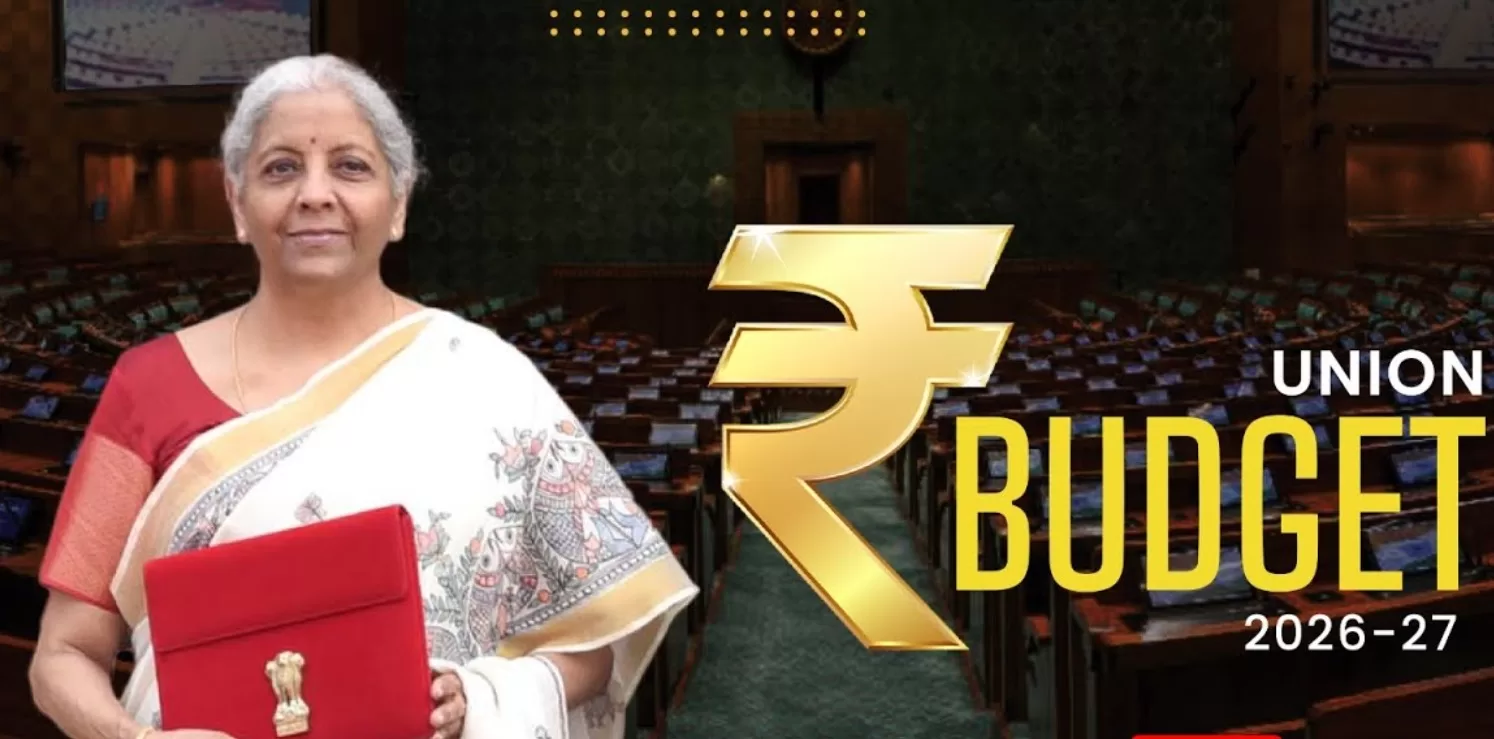
With the presentation of Union Budget 2026 by Finance Minister Nirmala Sitharaman, the government has laid out its economic vision for the coming year. Technology-led governance, jobs, manufacturing, and sustainability, Budget 2026 signals where policy intent is headed and which sectors are set to gain momentum. What this budget truly means for businesses, innovators, and the broader economy.
MSMEs remain the backbone of India’s economic engine, and Budget 2026 reinforces this reality with enhanced credit access, simplified compliance frameworks, and technology-led productivity support. Expanded credit guarantee schemes, incentives for formalisation, and digital onboarding are designed to reduce friction and improve scale.
Mr. Padmanand V, Partner – MSME, Grant Thornton Bharat – Great support is offered under the budget for the MSME sector both for old economy sectors as well as new economy sectors. Old economy sectors targeted include textile, engineering, handloom and handicraft, khadi and sports goods. New economy sectors include both bio-pharma and semi-conductors, and rare earth sectors. Cluster development and interventions through challenge mode PPP options is a thrust. Notably, an SME growth fund of INR 10,000 crore is also envisaged. In the new economy sector, semi-conductor R&D and electronics manufacturing capability is to be developed through a huge allocation of INR 40,000 crore. In the old economy sectors textiles, particularly, technical textile developing mega textile parks are also to be developed on challenge mode.
Ranen Banerjee – Partner and Leader Economic Advisory, PwC India – The theme of the Budget can be summarised as consolidation, rationalisation, and incentivisation – —consolidation of ongoing schemes, rationalisation of overlapping schemes, and incentivisation of business, individuals, and entrepreneurs through further ease of doing business.
Given the fiscal constraints, the Budget was on expected lines with the fiscal deficit for FY26 being met and the FY27 target being just 10 bps lower with the debt- to- GDP ratio targeted to be lowered by 50 bps. Job creation is a cross- cutting theme, with interventions and further momentum through creation of a cadre of Corporate Mitras, training of tourist guides, veterinary, hospitality, and allied healthcare professional skilling, and development of tourist circuits and specialised tourist trails.
Shrenik Gandhi, Co-founder and CEO, White Rivers Media: Budget 2026 opens with a clear belief in India’s orange economy – creativity, content, culture, and creators as real economic engines. By backing AVGC, sports, and creative education, it recognises the creator economy as an increasingly serious source of jobs and global influence. This marks a shift from viewing creativity as soft power to treating it as economic power. The larger message is that India’s growth will now be built on talent, not just infrastructure. Yuva Shakti is positioned as both a demographic advantage and an entrepreneurial force.
Startups are being acknowledged as core builders of scale, efficiency, and innovation. The focus on services signals confidence in India leading value-driven global exports. Artificial Intelligence clearly emerges as a key growth multiplier across sectors – from farms to classrooms to enterprises. What stands out is the intent to use AI to augment human capability, not replace it. Access to risk capital for MSMEs and women entrepreneurs remains a critical foundation. Job creation is being approached through skills, platforms, and long-term ecosystem thinking.
Overall, Budget 2026 reinforces that India’s next decade will be defined by builders, creators, and problem-solvers.
Manoj Kumar Vijai, Office Managing Partner – Mumbai & Head – Risk Advisory, KPMG in India:
Union Budget 2026 presents a forward-looking roadmap for India’s journey towards Viksit Bharat, anchored in Yuva Shakti, large-scale infrastructure, and technology-led growth. The significant increase in public capital expenditure to INR 12.2 lakh crore, alongside new economic regions, freight corridors, waterways, and high-speed rail networks, underscores the Government’s intent to accelerate execution and strengthen supply-chain efficiency. The emphasis on frontier manufacturing sectors – such as semiconductors, bio-pharma, chemicals, and MSMEs – signals a decisive move towards building globally competitive industrial capabilities, with tier-2 and tier-3 cities positioned as the next growth frontiers.
The proposal to set up a new Banking Committee for Viksit Bharat is a timely step towards strengthening financial-sector governance, improving credit flow discipline, and aligning banking reforms with India’s long-term growth and risk-resilience priorities. As NBFCs, MSMEs, and private capital play a larger role in financing and execution, robust governance frameworks, transparent controls, and effective risk management will be critical to prevent execution slippages, manage third-party risks, and safeguard public and private capital. The renewed focus on AI, quantum technologies, and digital infrastructure further elevates the need for strong data governance, cyber resilience, ethical AI frameworks, and forensic readiness.
The Budget’s commitment to fiscal consolidation, simplified tax laws, and ease-of-doing-business reforms reinforces the message that sustainable growth must be underpinned by disciplined execution, institutional trust, and accountability. For businesses, success in this next phase will depend not just on opportunity, but on how effectively risk, compliance, and governance are embedded into strategy and operations.
