


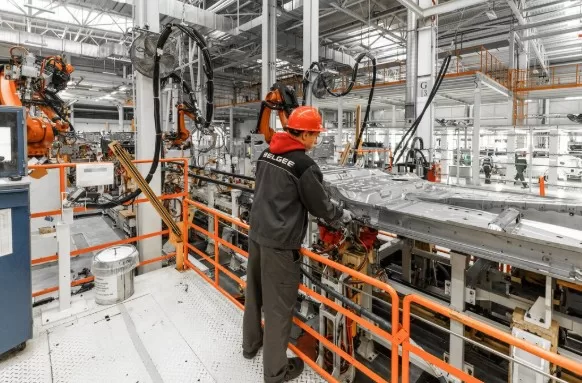
Manufacturing remains central to the budget’s vision of economic self-reliance and global competitiveness. Budget 2026 strengthens this focus through capital expenditure, industrial corridor development, logistics modernisation, and targeted support for high-growth manufacturing segment, Key industry leaders respond to the budget.
Mr. Aravind Melligeri, Executive Chairman & CEO, Aequs Limited: The decision to allow eligible SEZ manufacturing units to sell into the Domestic Tariff Area at concessional duty is a significant boost for companies that have created large-scale capacities in both the consumer and aerospace & defence sectors. At a time of global demand volatility and trade disruptions, this pragmatic measure will help improve capacity utilization, support operating efficiencies, and provide greater flexibility for capital-intensive manufacturing operations. For strategic sectors such as Aerospace and Defence, a more permanent framework for domestic sales from SEZs, would further strengthen India’s ability to meet growing indigenous demand while also becoming globally competitive.
More broadly, the Budget’s sustained focus on manufacturing-led growth, infrastructure development, and global competitiveness reinforces long-term policy clarity and investor confidence. Initiatives such as India Semiconductor Mission 2.0, the expanded Electronics Components Manufacturing Scheme, customs duty exemptions for aircraft components and MRO-related raw materials, and the substantial increase in defence spending, with indications of up to a 20% hike, collectively support deeper localization, modernization, and private sector participation. Together, these measures will create a stable and enabling framework for companies to scale investments, deepen capabilities, and integrate India more firmly into global manufacturing value chains
Mohammad Athar Saif, Partner and Leader CP&I and Industrial Development, PwC India: The Budget has done an excellent job of balancing immediate and long-term job creation by placing the integration of infrastructure and manufacturing at its core. An infrastructure outlay of ?12.2 lakh crore—representing a 9% increase—reinforces the government’s sustained focus on meeting India’s evolving infrastructure needs. Cities continue to be positioned as key growth engines, with a proposed scheme which will provide funding support of Rs5,000 crore per city as per their economic regions for all cities with populations above 5 lakh, and a strong emphasis on urban mobility through seven new high-speed connectivity corridors which could collectively strengthen the economic aspirations of urban India.
On the manufacturing front, the announcement of Semiconductor Mission 2.0, enhanced support for the electronics components scheme, plans to revitalise 200 industrial clusters, and a focused push on critical minerals could significantly strengthen India’s manufacturing ecosystem, and accelerating the country’s transition into a competitive global destination. This could also develop India’s self-reliance for emerging industries such as semiconductors, electronics, and advanced batteries, and advance the government’s vision of Viksit Bharat@2047.
Mukund Vasudevan, MD SKF India (Industrial) Limited and President – India, Southeast Asia and Middle East The Union Budget 2026–27 delivers a clear, confidence‑boosting push for India’s industrial growth. Despite maintaining fiscal discipline, the higher public CAPEX of ₹12.2 lakh crore signals strong momentum for manufacturing and infrastructure.
Reforms focused on financial access, technology adoption, and competitiveness lay the groundwork for long-term industrial strength – key for India to scale and compete alongside with global players. Investments in freight and industrial corridors, along with logistics upgrades, will lower costs, strengthen supply chains, and make Indian manufacturing more efficient.
MSME-focused steps such as the Growth Fund and an expanded TReDS ecosystem should ease liquidity and improve access to capital. Overall, the Budget reinforces India’s direction toward localization, private investment, and resilient industrial growth, giving businesses greater clarity and confidence to scale.
Amit Bhargava, Partner and National Leader, Metals and Mining, KPMG in India: Metals and mining is key for driving India’s ambition of ‘strategic indispensability’ (as defined by Economic Survey 2025 -2026) leading the country’s march as a manufacturing hub, AI leader and greater integration into global value chains. Union Budget 2026 has stayed true to that stated national path and specifically for metals and mining has further sharpened the focus on critical and rare earth minerals, increased logistics competitiveness and bolstered demand impetus.
Some of the key takeaways are:
• Establishing rare earth corridors in Andra Pradesh, Orissa, Kerala and Tamil Nadu which would also effectively help in setting up permanent rare earth magnets manufacturing facility
• Exemption of basic custom duty on critical minerals’ processing capital equipments
• Supporting MSMEs through growth funds and enabling interventions like corporate mitras, key for sector’s downstream
• Dedicated freight corridors and greater port connectivity for coal, iron ore, aluminum and steel hubs like Talcher, Angur and Kalinganagar
• Demand impetus through establishment of high speed rail corridors, container manufacturing, upgrade of 2nd / 3rd tier cities upgrade, equipment manufacturing and revival of industrial legacy
Mr. Pranav Bansal, MD & CEO, Bansal Wire Industries: The Union Budget’s Rs 20,000-crore Carbon Capture and Utilisation (CCUS) scheme is a timely and pragmatic intervention for India’s steel sector, where a large share of emissions are structurally hard to abate. Enabling CCUS deployment across power, steel, cement and refining can create immediate and measurable impact, allowing existing assets to align with climate goals while sustaining industrial growth. Equally significant is the Budget’s clear thrust on strengthening domestic manufacturing, particularly through support for construction and infrastructure equipment and the proposed infrastructure risk guarantee fund, which together can improve project viability and crowd in private capital.
For us, the real opportunity lies in integrating CCUS pathways, energy-efficient processes and cleaner material inputs into our operations, while continuing to serve India’s expanding infrastructure needs. The way forward must now focus on rapid technology deployment, bankable demonstration projects and close industry-government collaboration, so that India’s steel value chain can emerge as a globally competitive, low-carbon engine of growth for Viksit Bharat.” Mr. Pranav Bansal, CEO, Bansal Wire Industries Limited
Mr Prashant Mathur, CEO, Saatvik Green Energy: This Budget 2026 sends a strong and well-balanced signal for India’s clean-energy manufacturing ecosystem and marks a major step forward for India’s solar manufacturing story. By locking in long-term domestic demand through a record ₹12.21 lakh crore capital expenditure outlay and a nearly 29% increase for the PM Surya Ghar Muft Bijli Yojana, the government has created much-needed visibility for large-scale investments across the solar value chain. The extension of customs duty exemptions for lithium-ion cell manufacturing to battery energy storage systems directly strengthens both energy transition and energy security, while the exemption on critical inputs such as sodium antimonate for solar glass will improve cost competitiveness and accelerate domestic capacity creation in a strategically vital segment.
At the same time, rationalisation of customs exemptions and correction of duty inversions signal a shift from protection to performance supporting domestic manufacturing while enhancing export competitiveness. The continued focus on carbon capture technologies and long-term support for nuclear power underline a technology-agnostic approach to decarbonisation. For manufacturers like us, this clarity is a green light to scale to multi-GW capacities, invest in deep backward integration, and position India as a credible China+1 alternative and a globally competitive, export-ready clean-energy manufacturing hub.
