


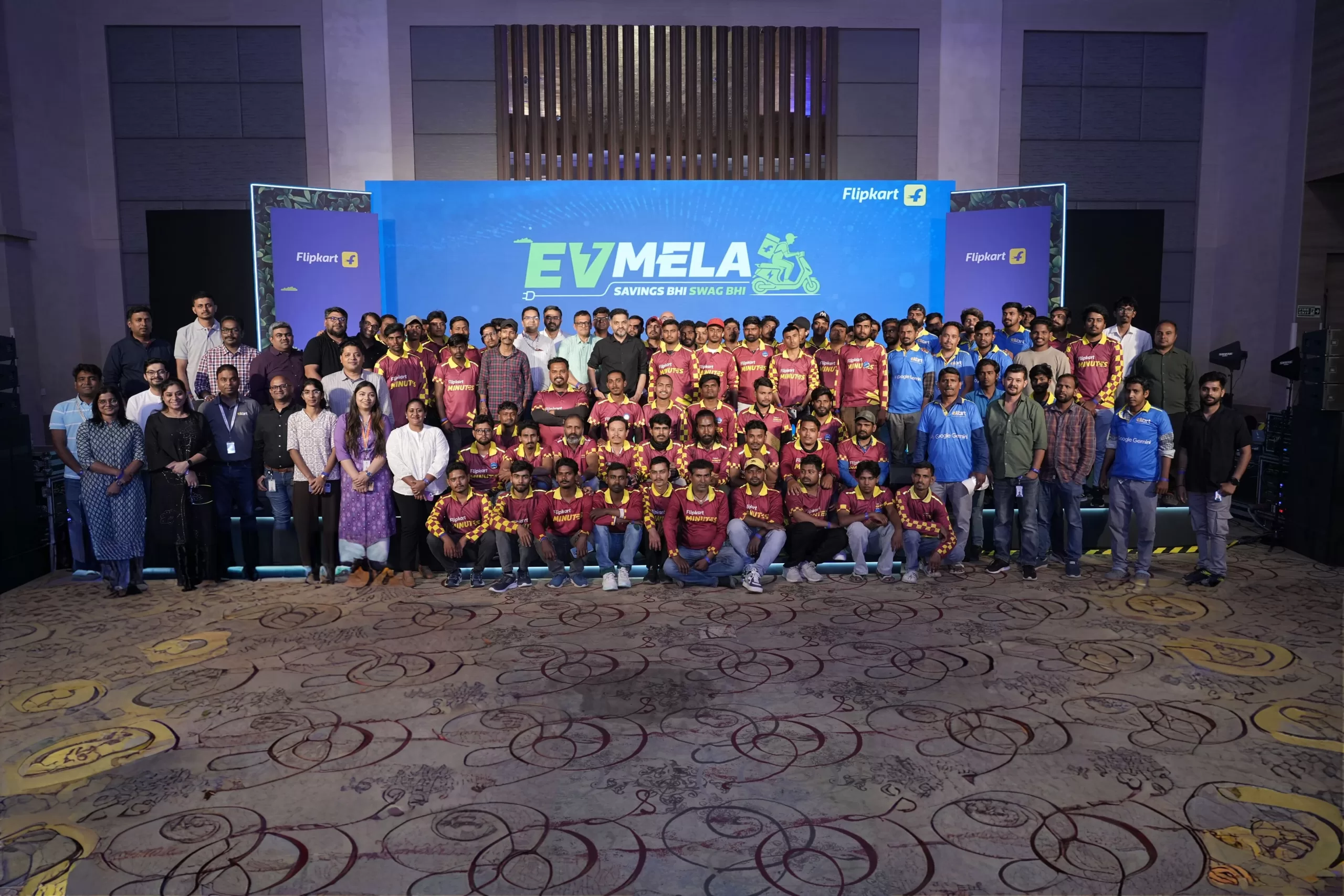
Flipkart has released a new white paper titled “The Last-Mile Leap,” highlighting growing interest in electric vehicle (EV) adoption among India’s delivery workforce, while underscoring the need for ecosystem-wide collaboration.
Based on a survey of over 6,000 delivery partners, the study finds that 46% are willing to transition to EVs, indicating strong intent within the last-mile logistics segment. However, adoption remains low, with over 94% still relying on petrol-powered vehicles, pointing to structural challenges rather than lack of interest.
Key barriers include high upfront costs, limited EV availability, concerns around range and performance, and inadequate charging infrastructure. Despite these challenges, operational patterns are well suited to EV usage. Nearly half of delivery partners travel between 40–80 km daily—within the range of most electric two-wheelers—while fuel expenses remain a significant cost burden.
The report positions last-mile delivery as a critical lever for accelerating India’s EV transition, given its high utilisation, urban concentration and potential for cost savings. Industry insights suggest EVs can reduce fuel costs by up to 70–80% and improve incomes through lower maintenance expenses.
Commenting on the findings, Nishant Gupta, Head of Sustainability, Flipkart Group, said: “Electric mobility presents a strong economic and environmental opportunity for delivery partners. With the right ecosystem support—from financing and charging infrastructure to servicing—EV adoption can scale rapidly while enhancing income stability.”
The report concludes that coordinated efforts across financing, infrastructure, vehicle design and training will be essential to unlock large-scale electrification of India’s last-mile delivery ecosystem.
