


70% of Indian executives are prioritising supplier diversification, while 59% are increasing inventory levels
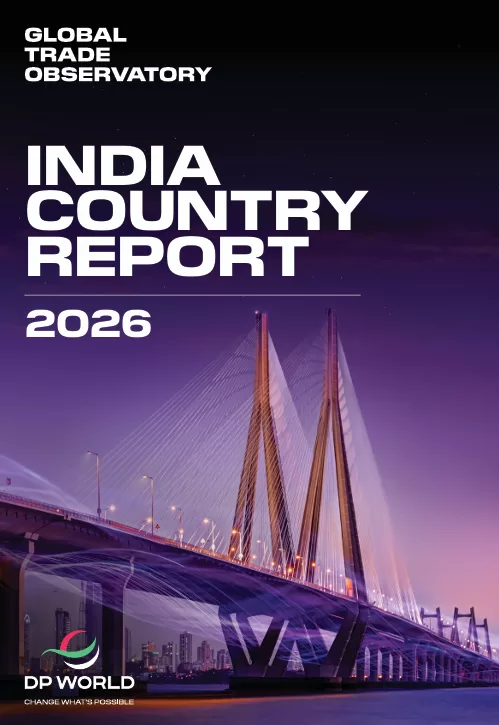
Indian businesses are redesigning their supply chains to strengthen resilience and support growth, with supplier diversification, inventory building and digitalisation emerging as key priorities, according to DP World’s India Country Report 2026.
Based on a survey of 451 senior supply chain and logistics executives, the report finds that Indian businesses place greater emphasis on resilience than global counterparts. Supplier diversification is the leading priority, followed by higher inventory levels and friend-shoring. More than half of Indian businesses have fully digitalised customer-facing services, compared with fewer than four in ten globally. AI is also being used for route optimisation, documentation and customs efficiency.
India’s changing trade landscape is supporting this shift. The PLI scheme is strengthening domestic manufacturing, while expanding trade relationships are creating new sourcing and market opportunities. FTAs emerged as the top policy priority for further trade growth, cited by nearly half of executives, ahead of digitalisation and trade facilitation. Access to trade finance is also stronger, with 57% reporting reasonable availability compared with 39% globally.
Rizwan Soomar, CEO & MD, Subcontinent, Central Asia, Levant and Egypt, DP World, said: “India’s trade story is entering a new phase, with businesses redesigning their supply chains to build resilience and unlock growth. Diversified sourcing, strategic inventory, digitalisation and access to new markets are becoming increasingly important in navigating disruption. At DP World, we help businesses trade with greater flexibility and efficiency by connecting ports, inland markets, logistics and technology, strengthening India’s competitiveness and role in global value chains.”
The report also highlights infrastructure priorities, with 46% of logistics executives identifying road networks as an area requiring focus. Businesses are increasingly adopting multimodal solutions, including rail and coastal shipping, to improve connectivity, efficiency and resilience.
