


New approach develops miniproteins targeting GPCRs, including CXCR4 and CCR5, linked to cancer and HIV
Researchers at IIT Kanpur, in collaboration with the laboratory of Nobel Laureate Prof. David Baker at the University of Washington, have contributed to the development of a new method to design small proteins that can target G protein-coupled receptors (GPCRs), an important class of drug targets.
The study, titled “De novo design of miniproteins targeting GPCRs,” has been published in Nature. The researchers used AI-based protein design to identify miniproteins capable of binding to specific GPCRs, followed by laboratory testing of selected candidates.
GPCRs act as signalling switches on the surface of cells and are involved in several biological processes. Many existing medicines target these receptors. The new approach could reduce the need to screen millions of chemical compounds by using computational design to identify promising protein candidates before laboratory testing.
The team designed miniproteins against several GPCRs, including CXCR4 and CCR5, which are being studied in connection with cancer and viral infections such as HIV.
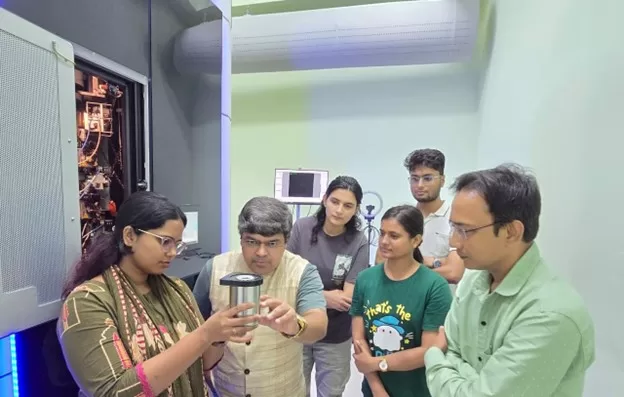
IIT Kanpur researchers also used cryo-electron microscopy at the institute’s cryo-EM facility to visualise how a designed miniprotein binds to CXCR4.
The research was led by Prof. David Baker’s laboratory, with Prof. Arun K. Shukla of IIT Kanpur serving as a major contributor. His team, comprising Dr. Ramanuj Banerjee, Manisankar Ganguly, Annu Dalal, Sudha Mishra and Shachie Sinha, contributed to the study.
The IIT Kanpur component was supported by ANRF, DBT and the Lady Tata Memorial Trust.
The researchers noted that the designed proteins are not medicines yet and will require further testing. However, the findings demonstrate the potential of AI-guided protein design as a practical approach to developing targeted molecules against challenging drug receptors.
