


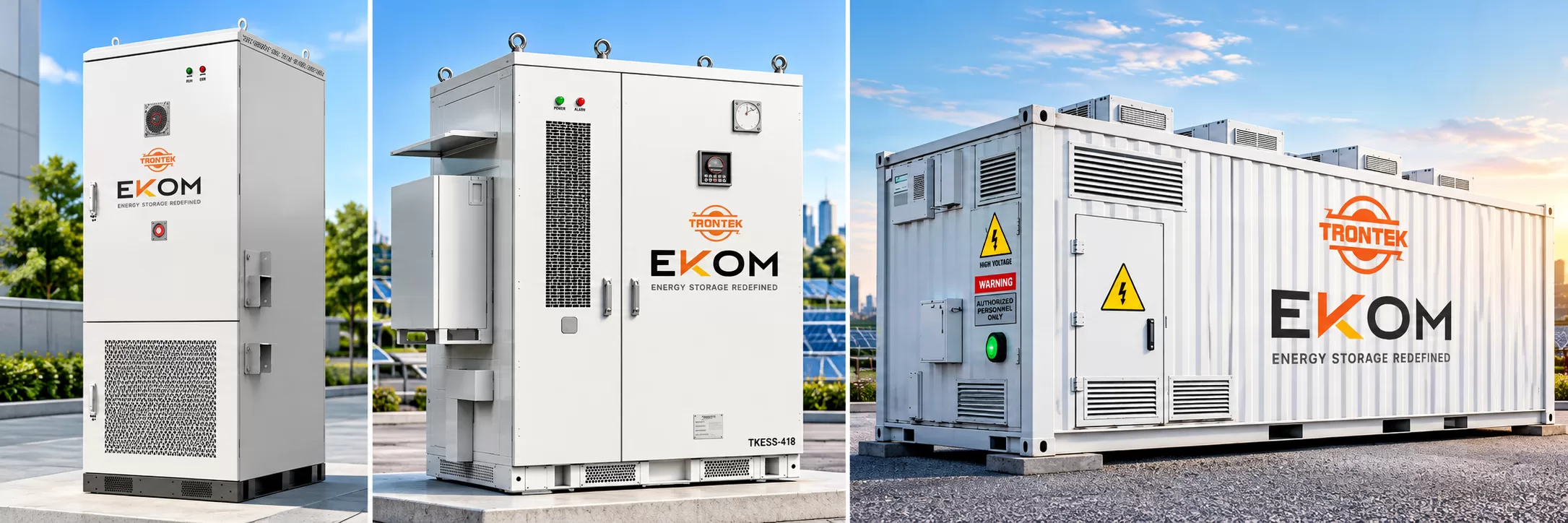
Made-in-India portfolio spans residential, commercial and industrial applications, with utility-scale systems of up to 5 MWh
Trontek Electronics, an Indian energy technology company, is expanding into Battery Energy Storage Systems (BESS) with a portfolio covering residential, commercial and industrial (C&I), and utility-scale applications. The company aims to achieve annual BESS manufacturing capacity of 12 GWh by 2028.
The expansion builds on Trontek’s experience of over two decades in battery technology, electric mobility, charging and energy solutions. Its portfolio includes storage systems ranging from 215 kWh to 5 MWh, designed to support renewable energy utilisation, power reliability and grid flexibility.
The offerings include modular residential solutions, 215 kWh-class systems for commercial establishments and smaller manufacturing units, 418 kWh-class systems for factories, hospitals and industrial campuses, and 5 MWh systems for utilities, industrial parks and large solar-plus-storage projects.
Commenting on the expansion, Samrath S. Kochar, Founder and CEO, Trontek, said, “The next energy revolution will not be about generating more power, but about making energy more intelligent, flexible and accessible. As mobility, homes, industry and the grid converge, storage will become a defining layer of the new energy economy. BESS is the next evolution of Trontek’s two-decade journey in battery and energy technology – taking our expertise from powering applications to enabling energy systems at scale, built in India for the opportunities ahead. India has the opportunity to build globally competitive energy storage capabilities. Trontek intends to help shape that future.”
Trontek’s strategy centres on local engineering and manufacturing, supported by capabilities in battery systems, testing, system integration, technology development and service.
With its planned capacity expansion, the company aims to strengthen its position in India’s energy storage market and build a broader energy technology business alongside its existing mobility and energy operations.
