


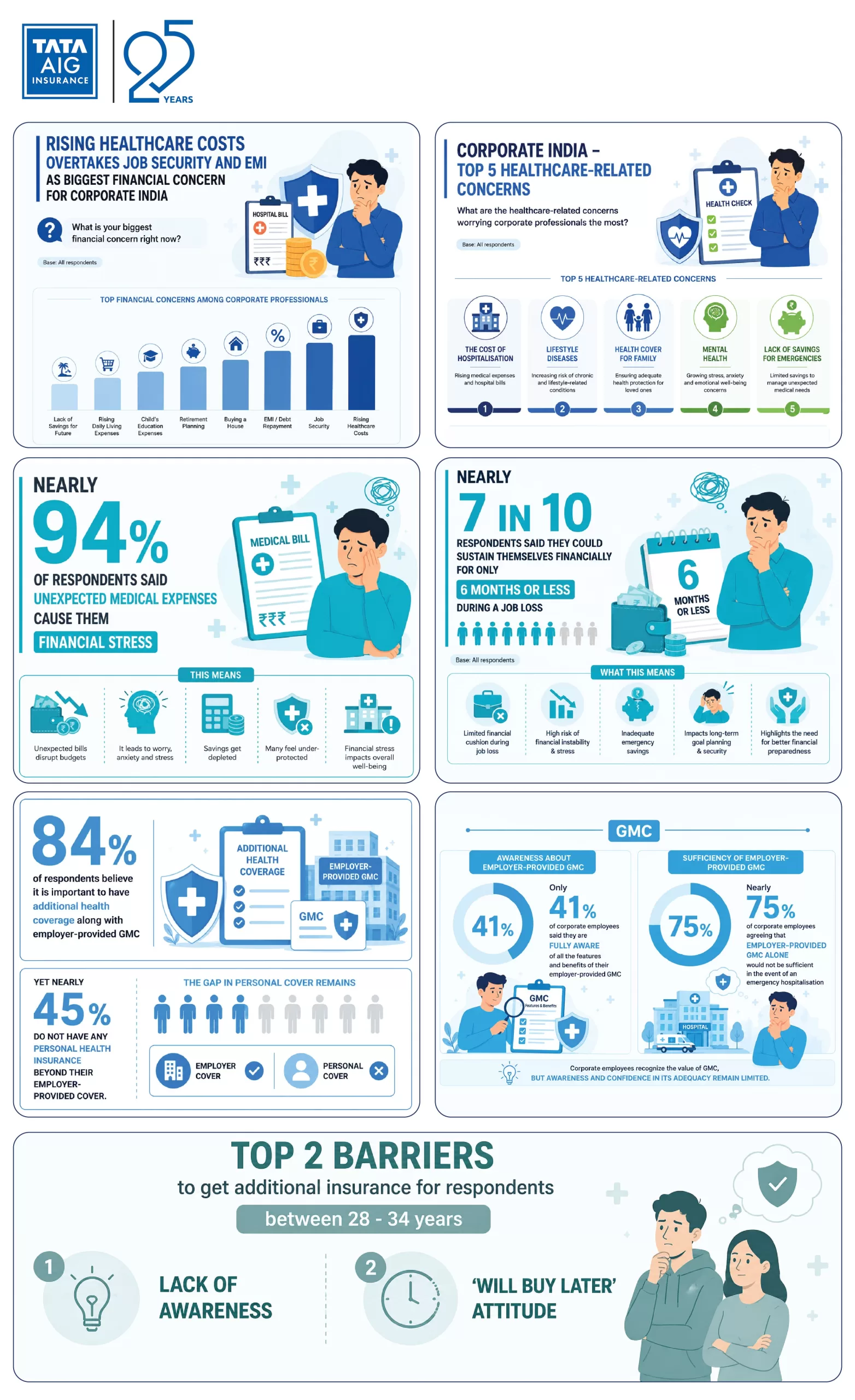
Tata AIG General Insurance Company has released findings from The Corporate Health Protection Pulse 2026, highlighting growing concerns around healthcare costs, financial preparedness and gaps in health insurance protection among corporate employees.
According to the study, 94% of respondents said unexpected medical expenses cause them financial stress, making healthcare costs a bigger concern than job security, EMI obligations and global instability. Nearly seven in ten respondents said they could sustain themselves financially for six months or less following a job loss, while only 12% believed they could manage for more than a year.
Hospitalisation costs, lifestyle diseases, family health coverage, mental health and emergency savings emerged as the top five healthcare-related concerns.
The study also highlights a significant protection gap. While 84% of respondents consider additional health coverage beyond employer-provided Group Medical Cover (GMC) important, 45% do not have additional health insurance. Lack of awareness and a ‘will buy later’ attitude remain key barriers, particularly among respondents aged 28–34.
Healthcare expenses were also identified as the biggest financial concern during a job transition. While 88% consider uninterrupted health insurance coverage important during a job change, only 40% are aware of solutions that can ensure continuity of medical cover.
Dr. Santosh Puri, Head of Retail – Health Underwriting, Tata AIG General Insurance, said: “Our aim with this study was to better understand how corporate employees perceive their employer-provided health insurance and to identify the gaps that continue to exist in awareness and preparedness. While Group Medical Cover remains an important pillar of employee wellbeing, the findings show that many individuals are still uncertain about the extent of their coverage and whether it would be adequate during a medical emergency or a job transition. As healthcare costs continue to rise, we believe awareness and financial preparedness will become increasingly important. We hope these insights encourage employees to make informed decisions about their health protection needs and foster greater collaboration between employers, insurers and policymakers to build a more financially resilient workforce.”
Nearly 75% of respondents agreed that employer-provided GMC alone would not be sufficient during emergency hospitalisation, while only 41% said they were fully aware of all its features and benefits.
The study surveyed 748 corporate employees aged 28–55 across Mumbai, Delhi, Bengaluru, Hyderabad, Chennai, Ahmedabad, Pune and Kolkata, all covered under employer-provided GMC policies.
