


India has a maths problem in healthcare. The country carries a huge share of the world’s illness, but has fewer than one doctor for every thousand people — below what the World Health Organization recommends. There simply aren’t enough doctors, especially in villages. In 2026, artificial intelligence is stepping in to help close that gap. Not to replace doctors, but to stretch the ones we have a lot further.
What AI is actually doing
Think of AI here as a tireless assistant that never sleeps and works in any language. A few examples already running across India:
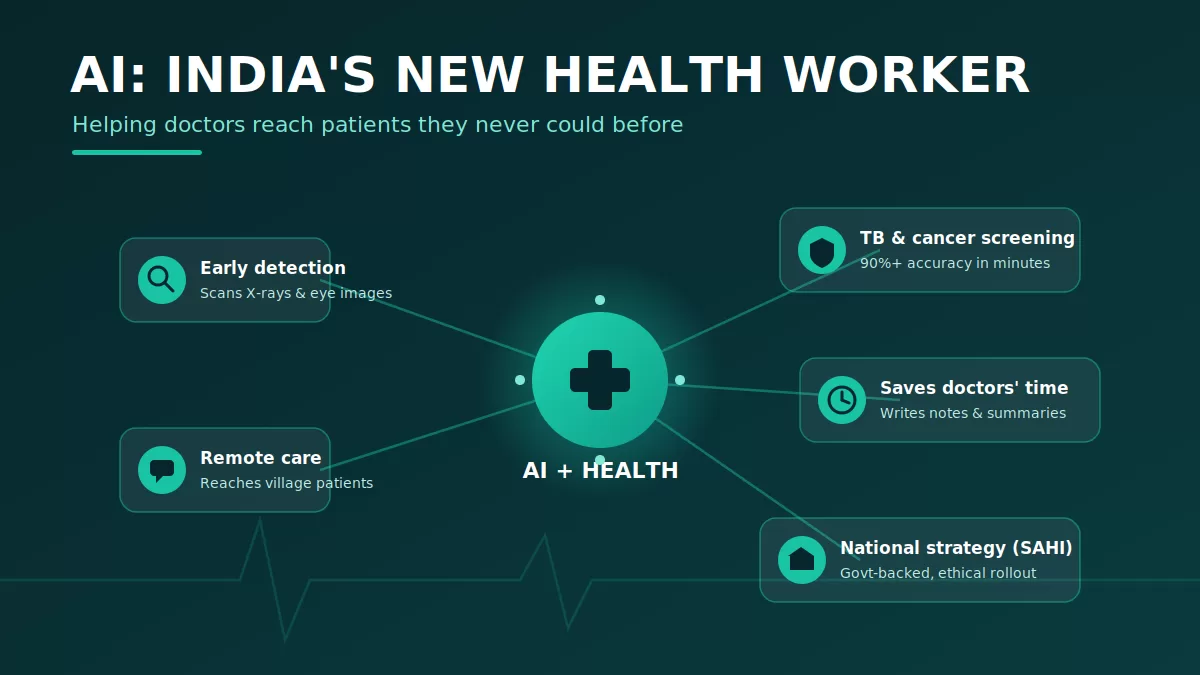
Spotting disease early. AI tools now scan medical images — chest X-rays, eye photos, breast and cervical screenings — and flag warning signs in minutes. In many district hospitals, these tools reach over 90% accuracy on tasks that once needed a specialist and a weeks-long wait. For tuberculosis, AI-assisted screening has helped cut bad outcomes by more than a quarter.
Reaching remote patients. India’s government telemedicine platform, eSanjeevani, has handled hundreds of millions of consultations. AI helps by sorting symptoms, suggesting next steps, and pointing patients to the right level of care — so a villager doesn’t have to travel for hours to find out whether they need a hospital at all.
Saving doctors’ time. In busy clinics, AI now writes up patient notes and discharge summaries and quickly sums up long medical histories. That means doctors spend less time typing and more time treating.
The government is backing it
This isn’t happening by accident. In early 2026, the Health Ministry launched a national strategy (called SAHI) to guide safe, ethical use of AI in hospitals. Top institutes like AIIMS Delhi have been named centres of excellence, and a digital health-records mission is slowly connecting patient data so these tools can work better.
The honest challenges
It’s not a magic fix. Many rural areas still lack steady electricity, internet and digital records — the basic things AI needs to function. There are real worries about patient privacy, and about whether tools trained on city data will work fairly in villages. Experts agree that public awareness must grow alongside the technology.
The bottom line
AI won’t hand India more doctors overnight. But by helping the existing ones see more patients, catch disease sooner and waste less time on paperwork, it is becoming one of the most practical tools in the country’s health system — quietly, and at remarkable speed.
