


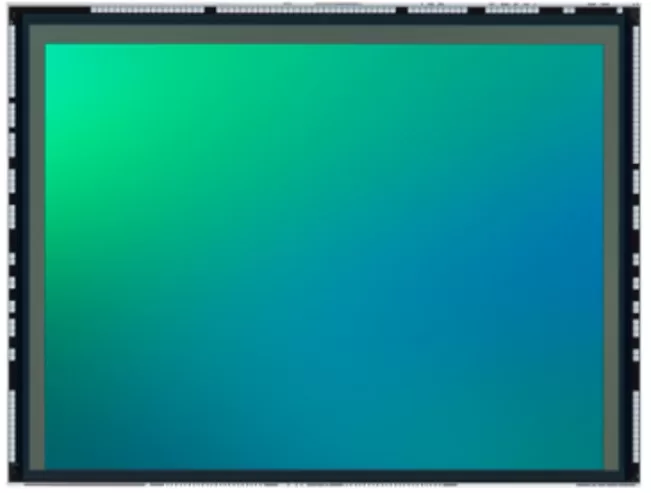
Sony Semiconductor Solutions Corporation has announced the launch of the LYTIA L910, a 50-megapixel CMOS image sensor for mobile applications that delivers 100 dB dynamic range while maintaining low power consumption. The sensor is among the first in Sony’s LYTIA lineup to incorporate the Lateral Overflow Integration Capacitor (LOFIC) structure, enabling improved image quality across challenging lighting conditions.
Designed to address the growing demand for high-quality photography, video creation and live streaming on smartphones, the L910 combines LOFIC technology with Sony’s new Triple Conversion Gain-HDR (TCG-HDR) technology and Ultra High Conversion Gain circuits. Together, these technologies help reduce highlight blowouts in bright scenes and suppress noise in darker areas, delivering more balanced images with greater detail from highlights to shadows.
The sensor achieves a dynamic range of 100 dB through a single exposure, helping minimize motion blur and flicker often associated with multi-exposure HDR technologies. Sony says the design also reduces random noise by around 30 per cent compared to its conventional sensor, improving image quality in low-light environments.
The LYTIA L910 further supports HDR video recording at 4K resolution and 60 frames per second while keeping power consumption in check through an optimized circuit design. The sensor also enables HDR image previews directly on smartphone displays, providing users with a more accurate representation of captured content.
The 1/1.28-inch stacked CMOS image sensor is scheduled to enter mass production in Summer 2026 and is targeted at next-generation smartphones focused on advanced imaging performance.
