


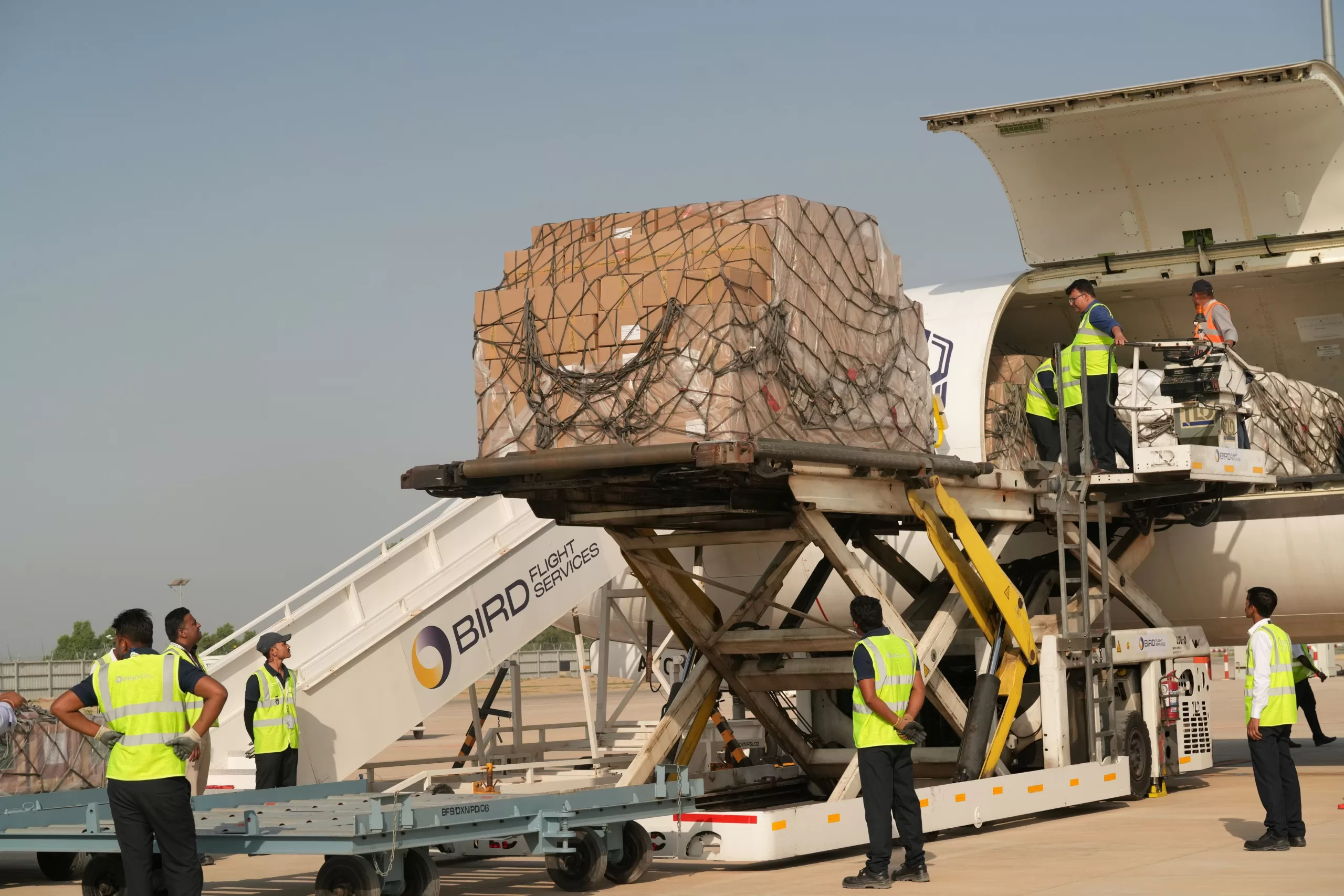
AISATS has commenced cargo operations at its Multi Modal Cargo Hub (MMCH) at Noida International Airport with the successful handling of its first domestic freighter flight operated by Afcom Holdings. The Boeing 737-800F aircraft flew on the Chennai–Noida–Chennai route carrying nearly 20 tonnes of cargo, including perishables, consolidation shipments, auto components and mobile devices.
Spread across 87 acres, the MMCH comprises a 30-acre Integrated Cargo Terminal (ICT) and a 57-acre Integrated Warehousing and Logistics Zone (IWLZ). The facility brings together cargo handling, warehousing, trucking and digital cargo management systems within a single ecosystem aimed at improving cargo movement and supply chain efficiency.
Ramanathan Rajamani, Chief Executive Officer, AISATS, said, “The successful handling of the first freighter flight at our MMCH’s Integrated Cargo Terminal marks the beginning of a new chapter in India’s cargo and logistics journey. As supply chains become increasingly time-sensitive and interconnected, the need for integrated logistics infrastructure has never been greater.”
He added, “By combining world-class infrastructure with seamless operational capabilities, we aim to create a logistics gateway that strengthens trade flows, supports businesses across North India and contributes meaningfully to India’s growing role in global commerce.”
The operation also highlighted the hub’s capability to support time-sensitive cargo, particularly perishables. The facility is expected to improve connectivity between producers in southern and coastal regions and markets across North India.
Deepak Parsuraman, Chairman and Managing Director, Afcom Holdings, said, “Partnering with AISATS at the Multi Modal Cargo Hub allows us to leverage integrated infrastructure that enhances operational efficiency and reliability.”
Christoph Schnellmann, Vice Chairman, Noida International Airport, said the facility will strengthen cargo connectivity for Northern India and support businesses by enabling faster movement of goods and better access to domestic and international markets.
The hub has been designed to handle perishables, pharmaceuticals, electronics, engineering goods, e-commerce shipments and express cargo, strengthening logistics capacity across the region.
